
Several judges have expressed concern about the effects of the Supreme Court’s [Bruen] decision. In Indiana, Judge Robert L. Miller wrote in one opinion issued in a gun case that he had “an earnest hope” that he had misunderstood the Supreme Court ruling.
“If not, most of the body of law Congress has developed to protect both public safety and the right to bear arms might well be unconstitutional,” wrote Judge Miller, who was appointed in 1985 by President Ronald Reagan. He added it was an insult to the drafters of the Constitution “to assume they were so shortsighted as to forbid the people, through their elected representatives, from regulating guns in new ways.”
Any major Supreme Court ruling can cause upheaval as judges reassess what is constitutional. Justice Thomas’s opinion was unusual because he wrote that the test that lower courts had been using to assess gun laws had been misguided. He offered the new methodology based on historical comparisons and effectively removed the precedent that had helped guide judges.
“That is an extremely rare thing and obviously extremely disruptive,” said David Pucino, the deputy chief counsel of the Giffords Law Center, a gun-safety advocacy organization. Mr. Charles found that the new test had confused judges, who, he wrote, “have reached wildly inconsistent conclusions about what the test requires and how it works in practice.”
When judges are confused about constitutionality, the public doesn’t stand much of a chance. New York’s old law, which required those seeking permits to carry guns in public to show that they had a heightened need to defend themselves, stood for more than 100 years. But Justice Thomas wrote that carrying guns was a constitutional right and thus people did not need to justify it by “demonstrating to government officers some special need.”
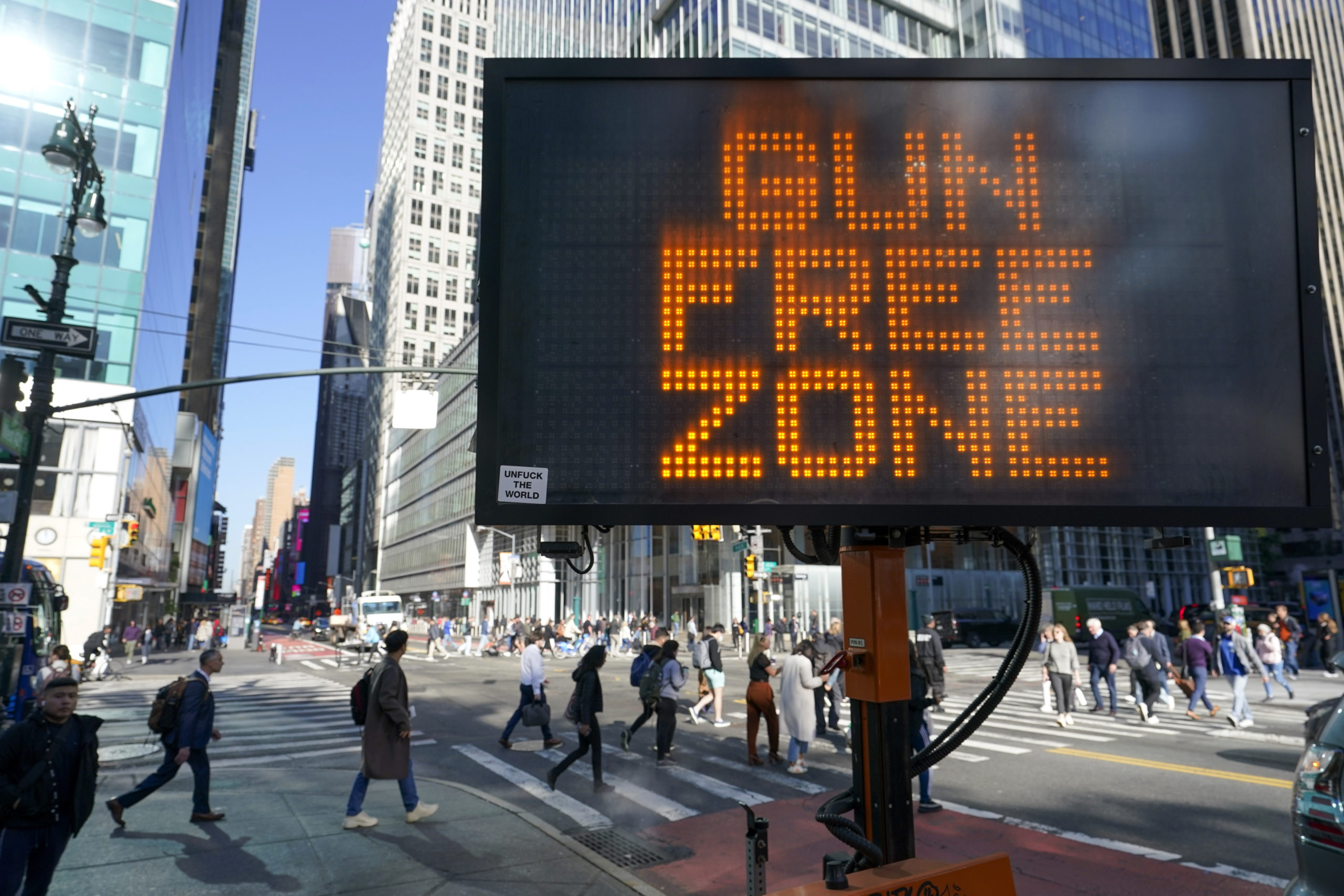
New York’s new law, no longer able to impose that standard, aims to at least keep people from carrying guns in “sensitive locations” that include Times Square, public transit, sports venues, houses of worship and many others — the types of places Mr. Seifer said his students inadvertently carried their weapons. The law also mandated training courses and a “good moral character test” for those applying for permits to carry in public.
The first challenge came little more than a week after the law was passed, and, after some legal hiccups, led a judge to block significant parts of the law. The judge, Glenn T. Suddaby, found in October that the Supreme Court had made it impermissible for New York to bar guns at health care centers, summer camps or zoos, among other places. But the state appealed and the law was reinstated by the U.S. Court of Appeals for the Second Circuit.
Later that month, another judge, John L. Sinatra Jr., blocked the portion of the law that barred firearms in houses of worship because he could not find an “American tradition” that supported it. The state appealed Judge Sinatra’s ruling, too. The relevant portions of the law went back into effect.
The following month, the measure was blocked again: Challenge. Ruling. Appeal. Repeat.