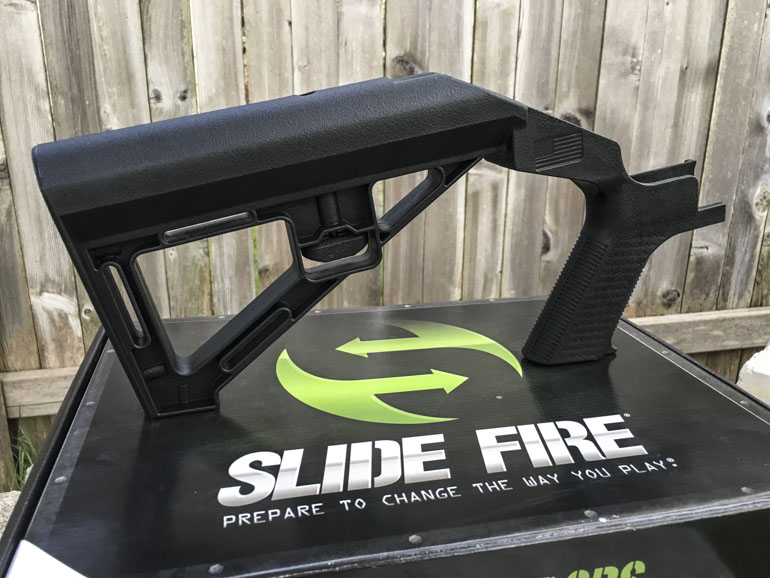
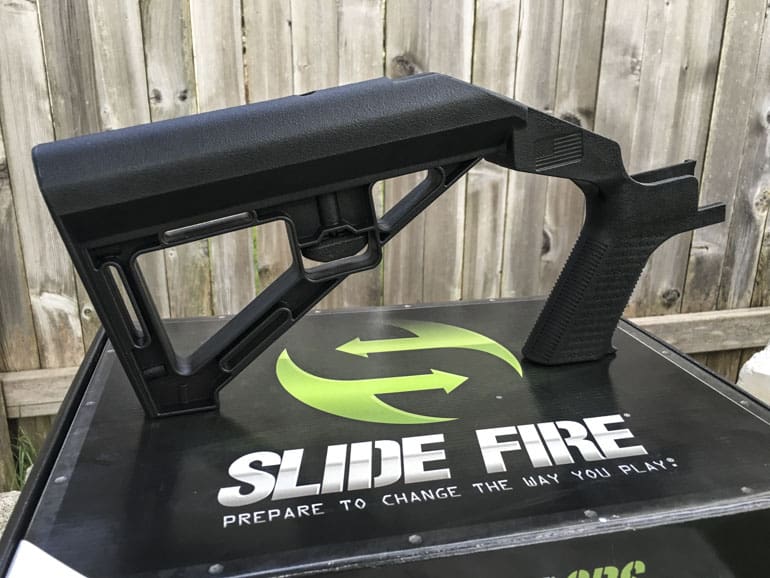
Jeremiah Cottle, who invented and patented the device, which he calls a slide stock, ran his Moran, Texas-based company Slide Fire Solutions for eight years before the Las Vegas shooting.
“And then the government came after me,” Cottle said.
On Oct. 1, 2017, a gunman in Las Vegas killed 58 people at an outdoor concert and wounded hundreds. Fourteen of the shooter’s 22 semi-automatic rifles were equipped with bump stocks, allowing him to shoot so many concertgoers in a matter of minutes.
Four months later, a shooter killed 17 people at a high school in Parkland, Florida. Though the shooter didn’t use a bump stock, public outcry mounted, and then President Donald Trump called for a ban on the device. The ATF quickly complied, issuing its federal rule — the ban — in December 2018.
By then Slide Fire had shut down amid lawsuits over the Las Vegas massacre. RW Arms in Fort Worth took over selling off the remaining inventory.
Cottle has rebranded Slide Fire as the American Bump Stock Company and resumed sales on Feb. 17, this time via the website bumpstock.com.
Business has been slow so far.
He sees two main reasons: trouble processing credit card payments, and uncertainty over how long ownership will remain legal.
“People are afraid of what the government is going to do,” he said.
His bump stocks cost $249 right now, about 15% more than before the ban, due to higher material and labor costs.
Cargill plans to sell the devices at his store in Austin soon.
ATF can still enforce the ban outside Texas, Louisiana and Mississippi, but the appeals court ruling protects buyers, sellers and owners in those three states.
“Essentially, the ATF is prevented from enforcing the rule for the time being in these three states,” Stevenson said.
— Emily Caldwell in Bump stocks sales resume in Texas, Louisiana and Mississippi after ATF misses deadline to appeal reversal of ban