
The [ATF’s national tracing] enter receives roughly 1,800 gun trace requests a day from local law enforcement agencies across the country. Their job is critical: take the identifying information they’re given and piece together a weapon’s path, from manufacturer to retailer to buyer.
But because of an arcane tracing system and serial understaffing and underfunding, it takes an average of eight days to fulfill a routine trace request. Under the quickest scenarios, it can take about 48 hours, but only if the center surges resources, such as after a mass shooting, said Neil Troppman, program manager at the tracing center.
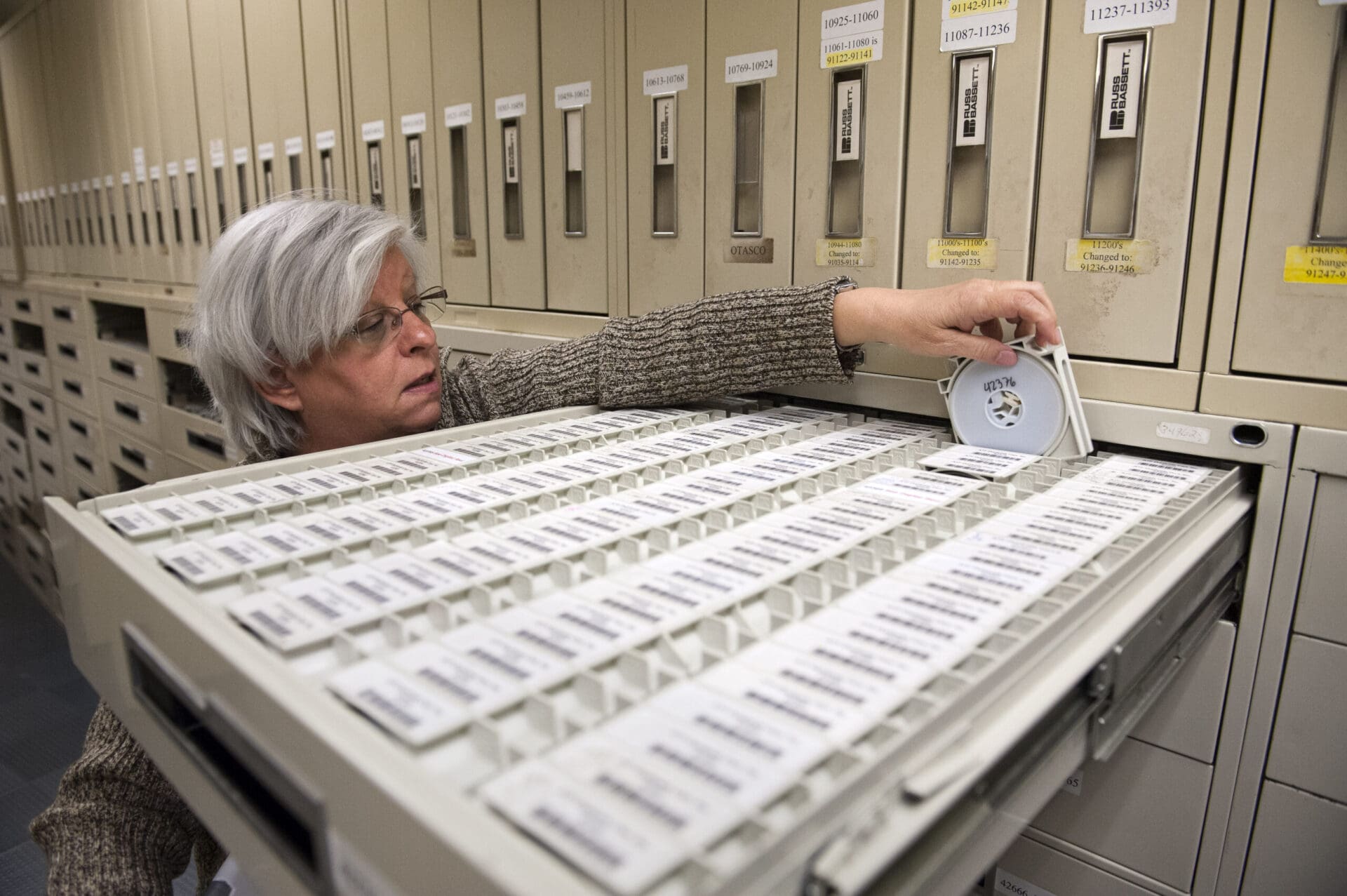
A look around the facilities explains why. Workers sometimes pull from stacked boxes of records that line the hallways, spreading the papers on the floor before taking a closer look. Other staff members spend their days converting any digital records the facility might have into non-searchable PDFs.
Congressional Republicans want it that way. They view the agency having far extended its defining purpose — turned by Democrats into a de facto arm for gun control.
“The ATF has a history of trying to target law-abiding gun owners and gun stores — rather than criminals — in pursuit of an anti-Second Amendment agenda. That’s not the purpose of the bureau, and that kind of agenda won’t keep our communities safe,” said a spokesperson for Sen. Ted Cruz (R-Texas) in a statement to POLITICO.
Sen. Chris Van Hollen (D-Md.), whose legislative push to modernize ATF lacks a GOP cosponsor, called the current limitations “deliberate roadblocks to the ATF being able to do its job efficiently.”
“But let me put it this way: Nothing in this bill is a further limitation on peoples’ abilities to purchase guns,” Van Hollen said in an interview.
The debate of the role and upkeep of the tracing center provides a vivid illustration of how the obstacles gun violence advocates face aren’t simply legislative but bureaucratic.
While much of the national conversation has focused on President Joe Biden’s renewed calls for an assault weapons ban after a mass shooting in Nashville last week, other pleas from the White House have also gone unnoticed. In particular, Democrats have been rebuffed in their legislative efforts to modernize a tracing center handcuffed by a 1986 law that prohibits the government from keeping “any system of registration” of firearms, firearms owners or sales. Their calls to increase funding for the ATF, the agency the White House sees as playing a vital role in combating the onslaught of gun violence, have similarly been rejected.