Remember the wonderfully-named Bipartisan Safer Communities Act? That’s the federal gun control bill that Joe Biden and the Civilian Disarmament Industrial Complex crowed endlessly about passing last year. It was portrayed as a huge victory for the superannuated Commander In Chief and it succeeded in the fevered post-Uvalde climate when Texas Senator John Cornyn, along with a few of the usual suspects, reached across the aisle to Connecticut’s peripatetically hoplophobic Chris Murphy to craft a gun control bill that gave Democrats a big PR win.
As we pointed out at the time, despite crossing the aisle, the usual senatorial suspects who jumped on the compromise train Senator Cornyn was driving were still dragged by the gun control industry and the media (yes, that’s redundant) despite all of the high-minded bipartisanship that made it happen. That’s because you can never compromise enough for the gun control industry…a lesson Cornyn apparently has never learned.
If the reception Cornyn got back here in Texas after the bill passed wasn’t enough of hint that caving to the gun control crowd was a bad move, maybe the reality of the implementation of the law he so eagerly promoted will get through to him.
One of the many features of the BSCA gun control law is its “under 21 enhanced review process” for firearm purchases (long guns only, as federal law bans handgun sales to them). Here’s how Cornyn’s partner in crime legislation Chris Murphy describes that part of the law . . .
- Requires an investigative period to review juvenile and mental health records, including checks with state databases and local law enforcement, for buyers under 21 years of age.
- NICS will have up to three business days to conduct the initial enhanced search. If that search reveals a possible disqualifying record, NICS will have an extended window of no more than ten business days total to complete the investigation.
- Provides additional funding to the FBI to administer new process checks in NICS and grants to help states upgrade criminal and mental health records therein.
That all sounds very nice, but what does that actually mean in the real world when an adult under 21 wants to buy a firearm?
It means a 10-day waiting period before they can take possession of their gun. Not just sometimes. Not just when the FBI turns up something questionable during the background check process. All the time.
Congratulations, Gun Nation — and Senator Cornyn, please step forward and take a bow — because thanks to the Bipartisan Safer Communities Act, we now have a de facto federal 10-day waiting period for gun sales to all adults aged 18 to 20 years old.
TTAG has talked to a number of FFLs in a range of states around the country. They tell us that every transaction for someone 18 to 20 years old is being delayed the initial three days. To be clear, that’s the same amount of time the FBI currently has to complete all NICS checks…but it rarely takes that long. The FFL usually gets an instant approval. Under the 1993 Brady law, if the NICS system doesn’t return an answer after three days, the retailer can choose to deliver the firearm anyway.
Under the BSCA, however, in addition to those three days, retailers tell us that every transfer for buyers under 21 is then extended for the additional seven business days the law now allows. Routinely. Every one of them.
Orchid Advisors is one of the biggest and best service providers for FFLs, helping them manage their inventory, ATF compliance and the like. Here’s what they tell their customers about life under the Cornyn-Murphy gun control law . . .
As a result of the passage of the Bipartisan Safer Communities Act (BSCA) of 2022, the NICS Section has been working towards the implementation of an enhanced background check process for persons between the ages of 18-20. The enhancement provides the opportunity for additional outreach and research to be conducted regarding the existence of any juvenile adjudication information and/or mental health prohibition. As a result, transactions on persons between the ages of 18-20 will initially be delayed allowing for the additional outreach. To conduct this outreach and research, the address of the individual will be collected so that the appropriate local law enforcement entities may be contacted.
NICS transactions for persons under the age of 21 could be extended for a period up to ten (10) business days. As a result, it is possible for an FFL to be contacted with an updated Brady Transfer Date in certain scenarios. In these situations, NICS staff will be calling to advise of the change. …
Please note, if no potentially prohibiting information is located, the transaction will proceed as soon as possible.
That description reflects the law as written, but that’s not what’s actually happening. Sales transactions don’t “proceed as soon as possible.” Again, according to the FFLs we’ve spoken to, every transfer for every adult under 21 now takes the full ten business days.
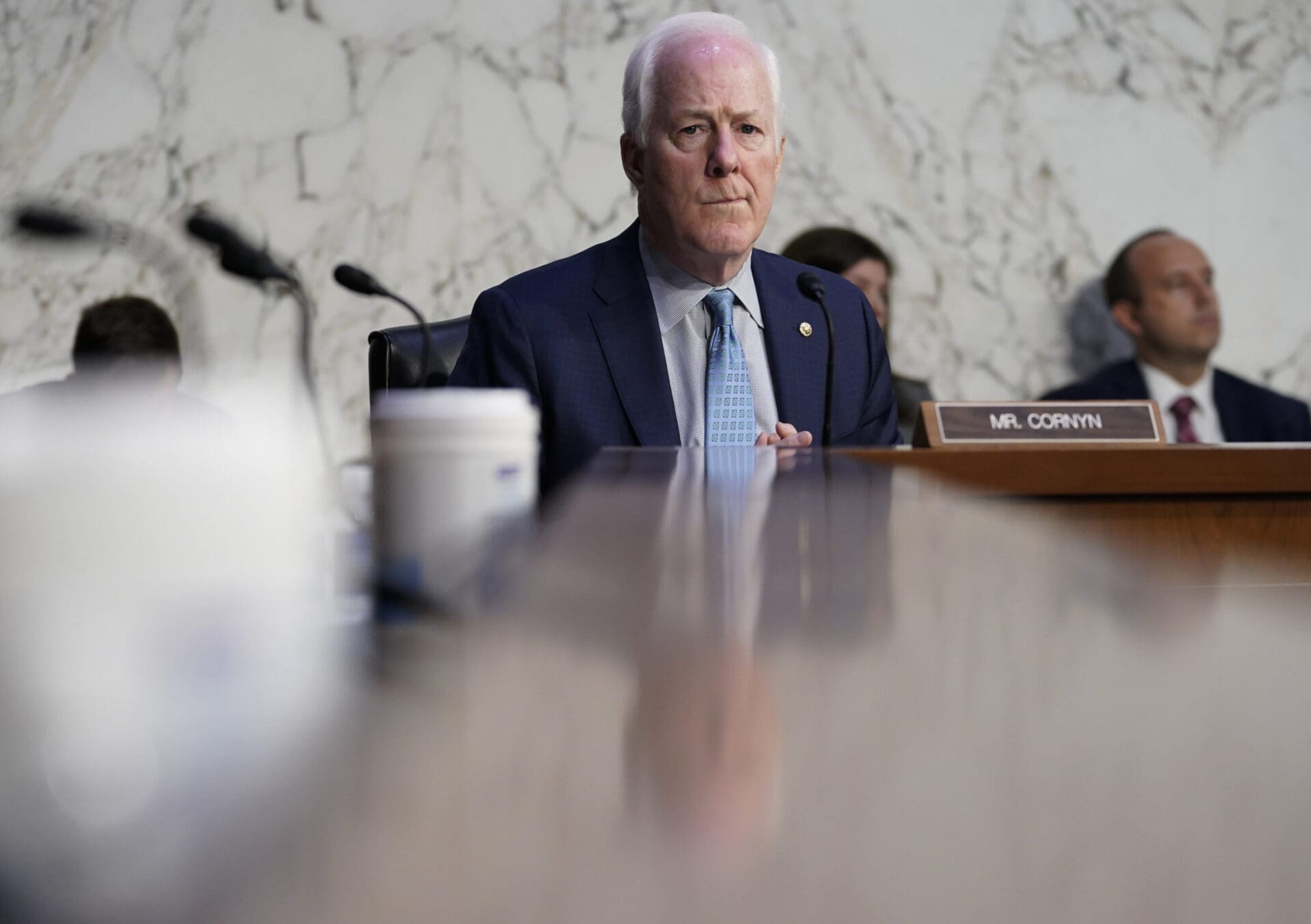
The BSCA went into effect last November. In January, some of the Senators who proudly voted for this thing took a little trip to the FBI’s West Virginia Information Services Division operation to see how implementation of the law was going.
“Today, we were able to host a bipartisan congressional visit to our CJIS Division and provide a briefing of the FBI’s implementation of the Bipartisan Safer Communities Act (BSCA),” said FBI Director Christopher Wray. “The BSCA requires our National Instant Criminal Background Check System to alert state and local law enforcement of background check denials as well as expands checks for young adults. The FBI remains dedicated to meeting all of our legal requirements in order to protect the American public.”
That’s the only mention of the under-21 process in the FBI’s press release on the meeting. We’re told that while they were there, the senators got assurances from the FBI that the requirements under the BSCA would not be treated as a 10-day waiting period.
So much for all that.
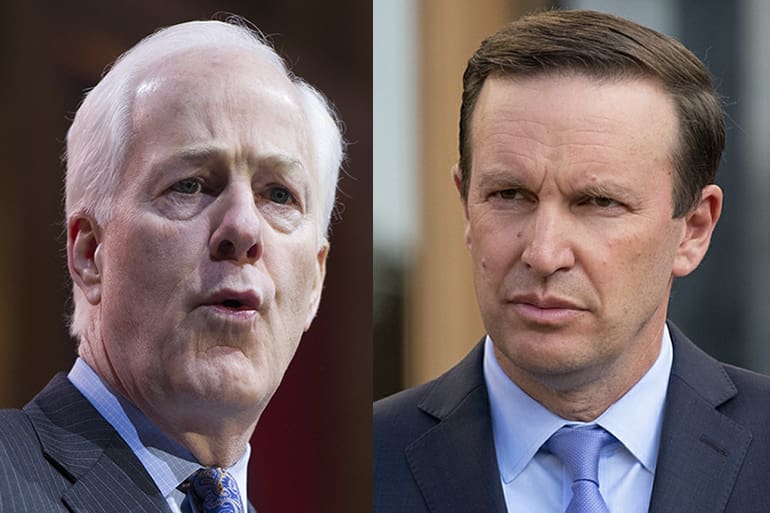
We wanted to find out what the primary sponsors of the gun control law, Senators Cornyn and Murphy, had to say about what’s happening, so we contacted them. No one in Murphy’s office could be bothered to get back to us. Cornyn’s office would only talk off the record, mostly.
We’d heard that Cornyn sent a letter to the FBI confirming his understanding of the law he supported and voted for, namely that the BSCA does not establish a 10-day waiting period. Cornyn’s Deputy Press Secretary, Audrey Cook, confirmed “that Sen. Cornyn did send the FBI an oversight letter on implementation that flagged his interpretation of the statute’s plain language.”
Good to hear. I asked Cook for a copy of that letter, but she told me “I don’t have a copy to share.” OK then.
I talked to Larry Keane, the NSSF’s Senior Vice President and General Counsel about what we found. He told us that while that may be happening in practice, the language of the law as written does not, in fact, establish a 10-day waiting period.
The law is clear it is NOT an automatic 10-day waiting period. The additional 7 days runs from when they have something to investigate. In no event can that be longer than 10 days. The check must start immediately.
He said the law gives states more than enough time to get records to NICS so that it doesn’t take that long.
In addition to noting that NSSF opposed that language in the law, he also said . . .
If NICS knows that state X will not provide juvenile records to NICS they should not be delaying the transaction since there is nothing to investigate.
So let’s be clear here. Whatever the BSCA language may be, in practice law-abiding adults under 21 years of age are now having to clear a higher hurdle to exercise a fundamental, constitutionally-protected civil right than other adults based solely on their age. That’s a clear violation of their Second Amendment rights.
We talked to the Firearms Policy Coalition and the Second Amendment Foundation about that. Both are aware of the obvious constitutional problem the law presents, but are letting another in-process challenge play out first.
Both orgs have sued challenging the federal ban on handgun sales to adults under 21 in Reese v. BATFE. The federal handgun purchase prohibition is similarly constitutionally problematic and if that case goes the way both orgs hope and expect, that will provide a very good legal basis to then challenge the BSCA’s under-21 provisions.
None of the bill’s supporters in Congress sold it on the basis of it instituting a waiting period on gun sales for adults under 21. There’s no way to know if all of the GOP supporters of the law (list here) would have gotten behind the bill if they’d known this would be the practical effect. Whether any of then will now press the FBI to abide by the letter of the law remains to be seen.
In the mean time, though, the Second Amendment rights of a cohort of law-abiding adults are being violated on a daily basis. Like the 1994 “assault weapons” ban, the BSCA sunsets after 10 years, but that doesn’t do anything about the violations that will take place until the law terms out or is invalidated by the courts.