

The Washington Post, a once-respected newspaper, and The Trace, one of Michael Bloomberg’s anti-gun activist organizations, recently cranked out a “joint investigation” hit job on one of America’s most popular firearms, the SIG SAUER P320. The authors were Tom Jackman for the Post and Champe Barton for The Trace, and the article was published by both websites.
As perhaps the largest firearms and components manufacturer in the country and the winner of multiple large military contracts over the last few years — including the M17 variant of the P320 taking over as the standard-issue sidearm for all branches of the U.S. military — the “why” of targeting SIG SAUER is abundantly clear. The “how,” though, is what’s interesting, as is the writers’ decision to omit key details of how the P320 actually works.
There’s much more to consider in everything the WaPo and The Trace wrote about the gun, but I’m going to solely address the technical aspects of the P320’s action and internal safety mechanisms, and how reality differs from the misleading picture that was painted in the articles.
In attempting to claim that the P320 design is “uniquely dangerous,” the WaPo and Trace articles, available here and here, home in on the fact that, like dozens of other striker-fired handgun designs, the pistol lacks a manual safety. Trying to describe how the P320 works, the authors wrote the following on either side of an embedded video animation that I’ve also included below . . .
Civilian models of the P320 have two internal safeties, but neither can be controlled by the user. The primary internal safety is designed to catch the striker in the case of a malfunction. A second mechanism prevents the weapon from discharging when its slide is drawn backward.
The gun’s primary internal safety, called a safety lock tab, is designed to block the striker from springing forward to detonate a round. With minimal pressure to the trigger, this tab is pushed upward and out of the way of the striker. Some critics of the P320’s design have alleged that the ease with which this safety is disengaged makes the gun more vulnerable to unintentional discharges.
Put aside the fact that “some critics” means a gunsmith from one of SIG’s competitors (a paid witness for plaintiffs’ attorneys) who further destroyed his credibility by completely contradicting himself in a deposition and the fact that “minimal pressure” means nothing here as they don’t bother to quantify it (in reality, it’s the 5-plus-pound trigger pull weight needed to fire the gun). Most egregious is that the WaPo/Trace writers seemingly chose to entirely omit an important, third internal safety mechanism of the P320.
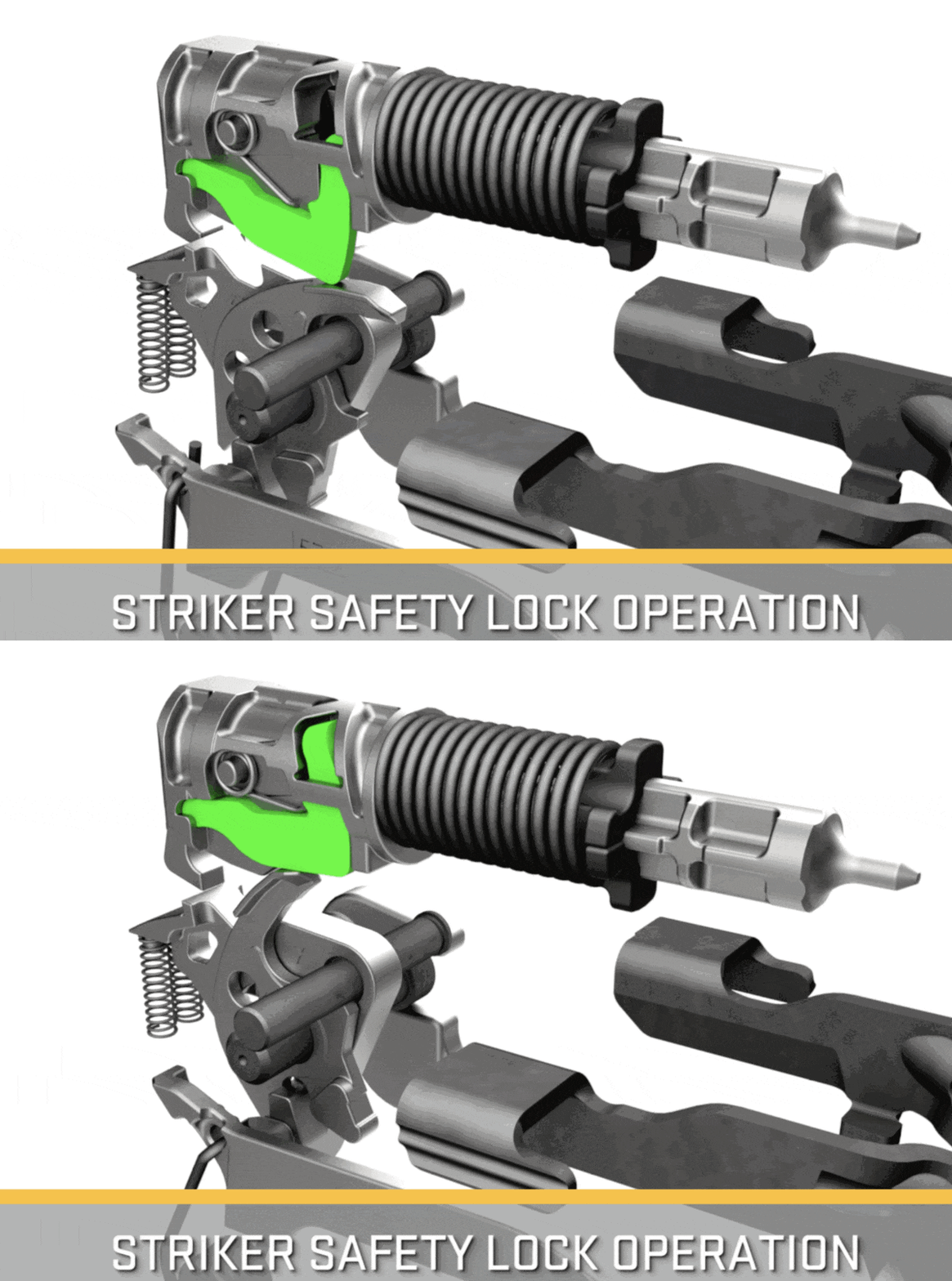
They correctly displayed the striker safety lock. This lever, which physically blocks the ability for the striker to impact the primer, lifts up during the trigger pull. Only near the end of the trigger pull has it moved far enough to allow the striker to pass it by.
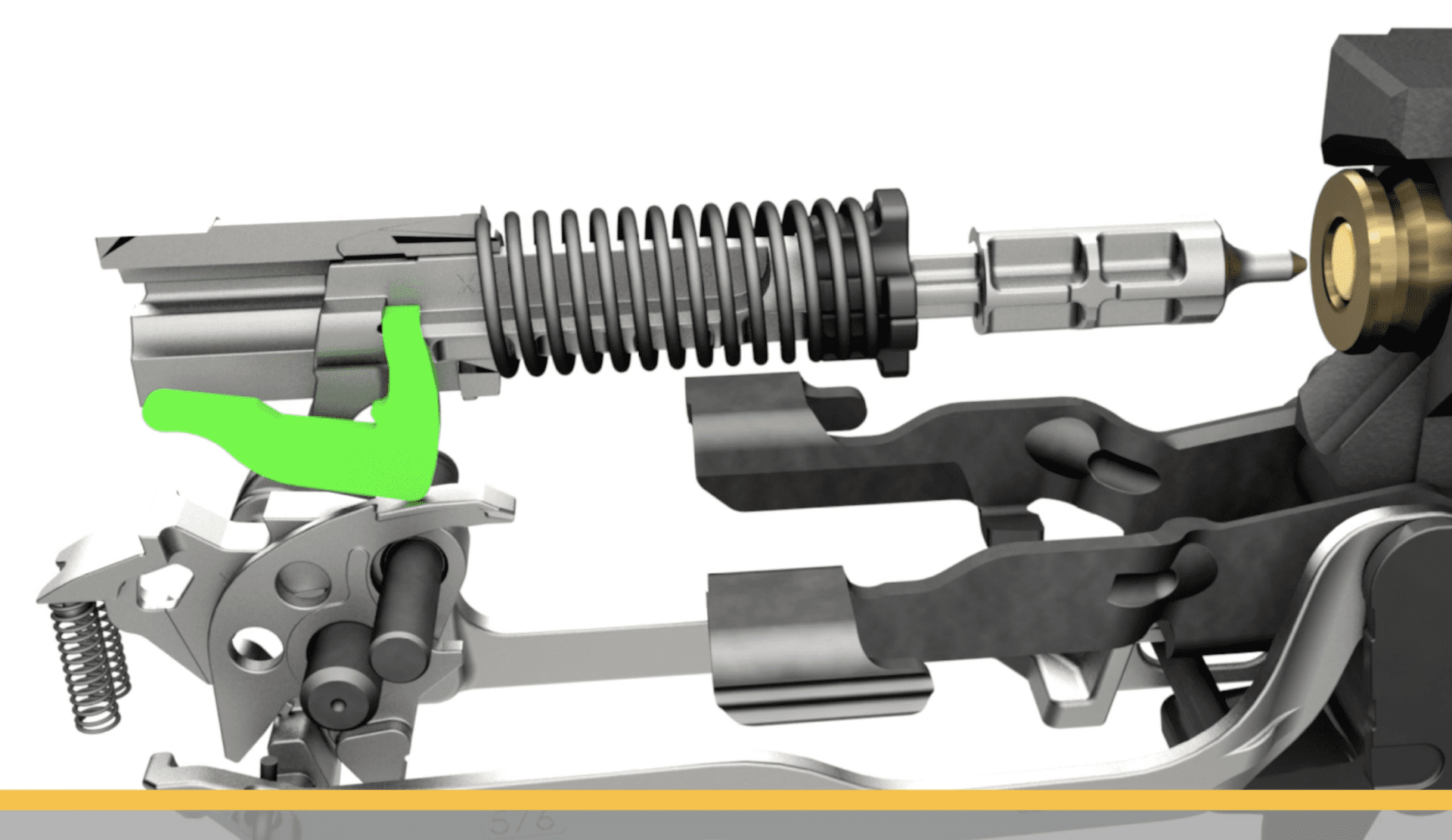
Above is an image of the striker in its forward-most position should the striker safety lock not have been moved out of the way via a depressed trigger. It physically blocks the striker from going farther.
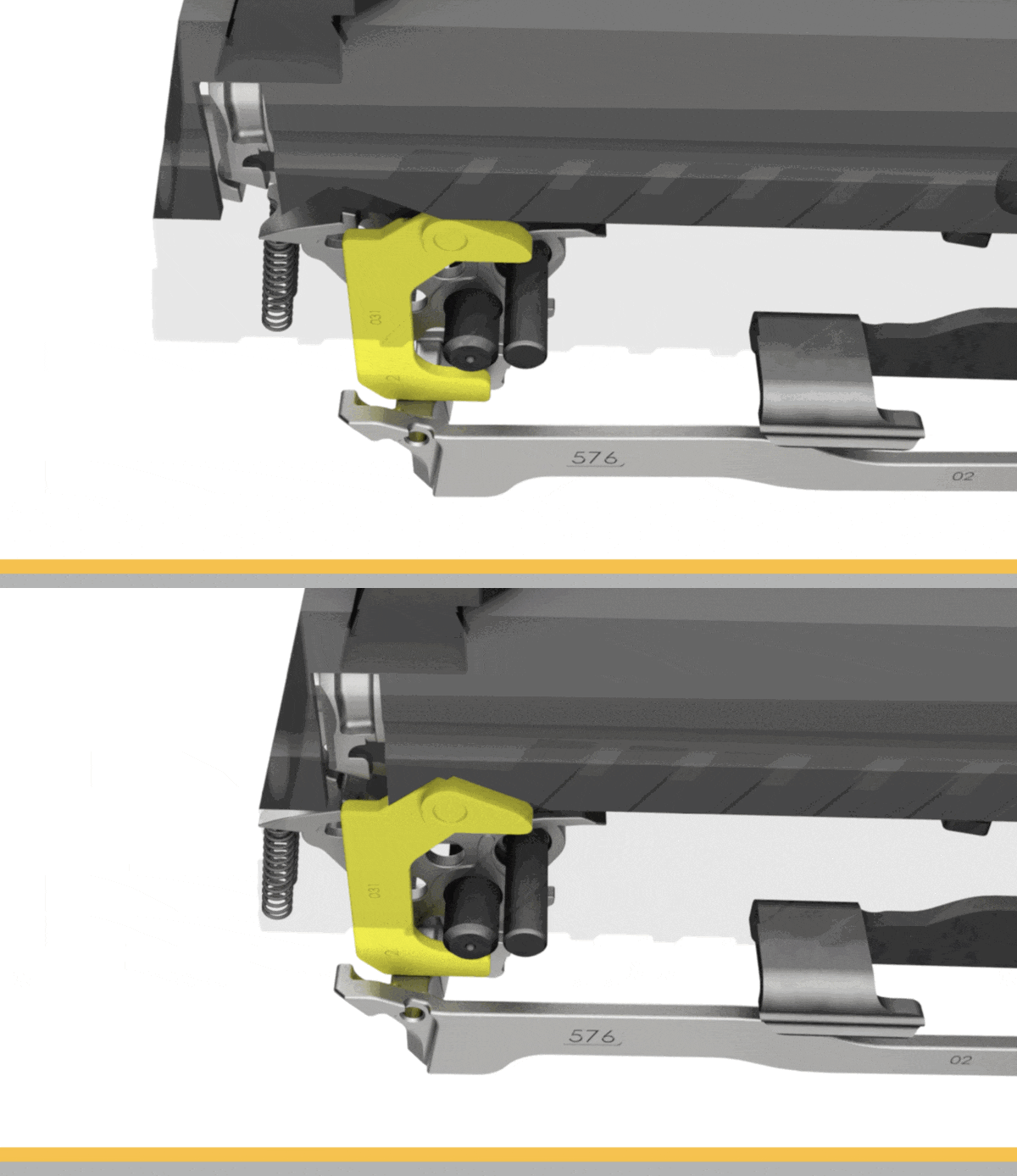
The WaPo/Trace articles and video also display and describe the disconnector safety, which pushes the trigger bar down when the slide isn’t fully in battery (fully closed). With the rear of the trigger bar pushed down, it’s no longer capable of contacting the sear, so a trigger pull can’t release the striker.
So, I suppose, good on the authors for admitting that SIG did build safety mechanisms into the P320. Then again, the earlier quote and video from the WaPo/Trace article is immediately followed by this gem . . .
According to an October report from James Tertin, a gunsmith at the Minnesota-based gun manufacturer Magnum Research, this is a highly unusual and “uniquely dangerous” configuration, which is found in only two models of SIG Sauer pistols. (Magnum Research is a subsidiary of the gunmaker Kahr Arms, which also produces pistols sold in the United States.)
This is either a bold-faced lie or this guy has no experience or knowledge of other striker-fired pistol designs. There are literally dozens of models of striker-fired guns dating back to the 1970s with this configuration, including many models that have fully-cocked strikers, as the P320 does, many with mostly- or partially-cocked strikers, and many with un-cocked strikers.
BUT…the WaPo/Trace article and Tertin’s quotes entirely neglect to acknowledge a third internal safety mechanism in the P320 which, to my knowledge, is actually unique to SIG SAUER in the world of striker-fired pistols.
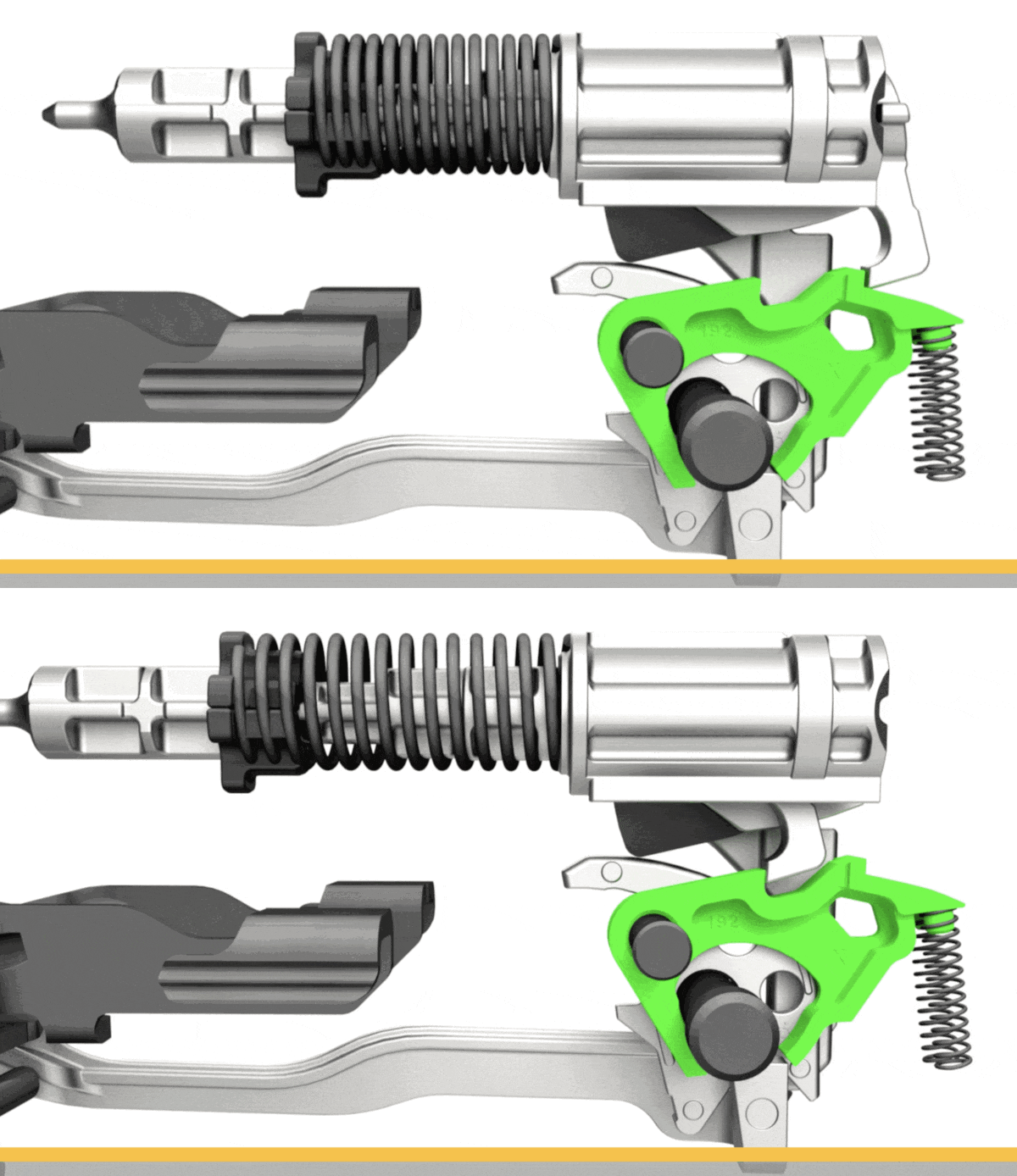
The P320 has a secondary sear. Should, for some reason, the striker manage to slip off the top of the primary sear, it’s designed to be caught on a second, forward sear. The two springs applying upward pressure to the rear of the sear ensure it is always rotated up against the striker, only rotating down to fire the striker at the very end of the trigger’s travel.
Until and unless the trigger is depressed nearly to the very rear of its available travel distance, the sear and the secondary sear remain in place, holding the striker to the rear and providing a backup method of holding the striker to the rear, respectively. That’s in addition to, of course, the aforementioned striker safety lock lever.
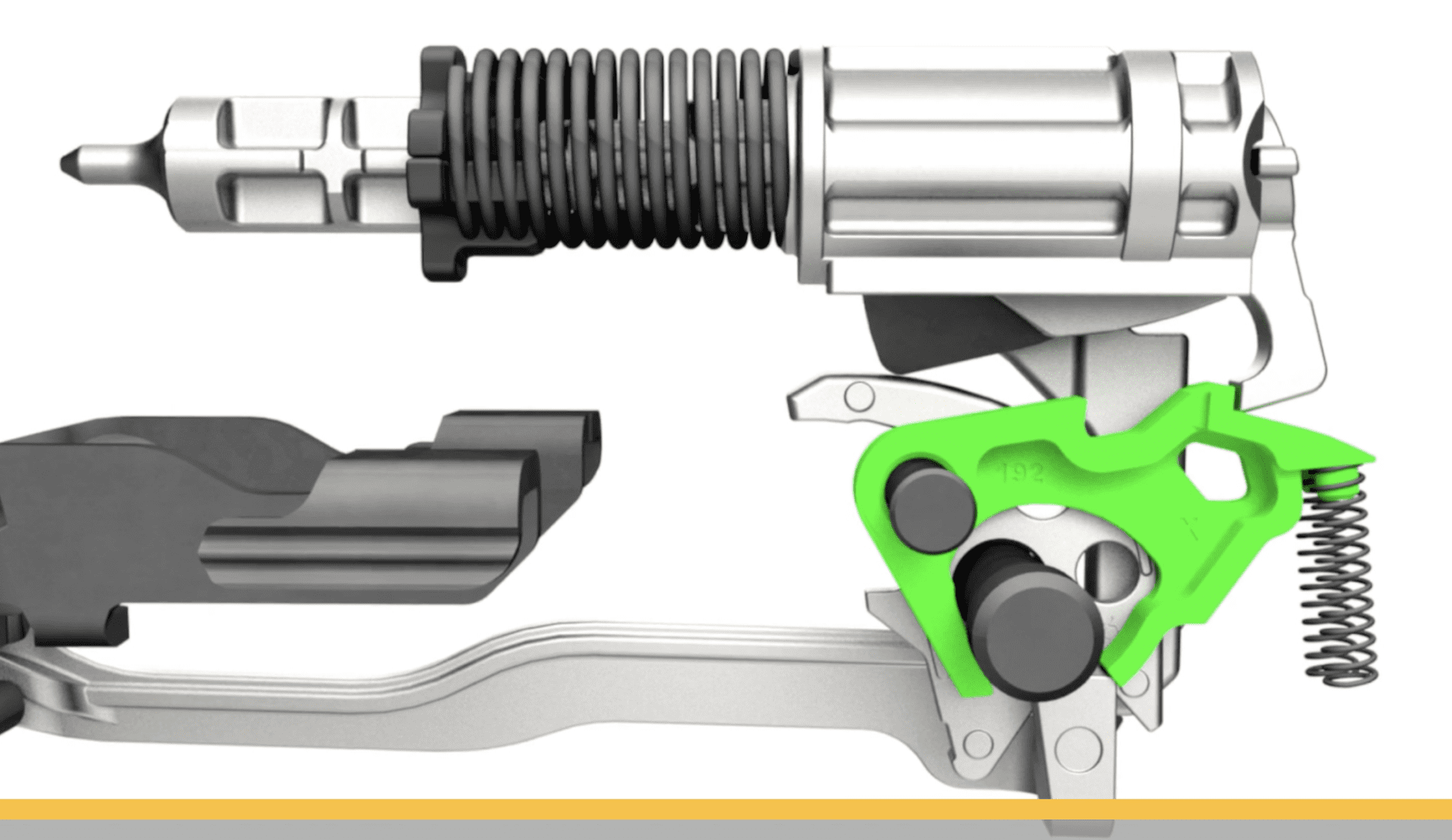
Speaking from my personal firearm design and testing experience, there are multiple aspects of this sear system that I find to be extremely smart.
• The trigger bar doesn’t even begin to contact the sear until the the trigger has been pulled an appreciable distance rearward. I can’t accurately quantify that distance (in inches or in percentage of trigger pull) based solely on these mechanical animations, but suffice it to say that the trigger appears to move at least halfway through its travel before the sear receives first contact to begin its rotation. This is inherently safer than designs with a similar amount of sear/striker overlap that begin to disengage immediately, which I believe is the norm.
• The rotating sear is capable of moving farther upwards than necessary and is held down at the proper height by the striker itself. This “extra” range of travel combined with the constant upward pressure provided by dual sear springs at the rear ensures 100-percent sear engagement in effectively any scenario. Not only does this greatly alleviate the necessity of holding extremely tight tolerances on dozens of components, but it automatically accounts for potential dimensional changes caused by wear, coatings (e.g. Cerakote, anodizing, etc.), foreign debris, and more. Furthermore, a sear that’s pushing up on and “following” the striker provides extra insurance against striker release due to impact on the firearm.
• It appears to me that considerations have been intentionally made to avoid and/or cancel out potential inertia-driven movement of internal components. For instance, the trigger shoe moves rearward while the connected trigger bar moves forward (the mass of one will tend to counteract the mass of the other during an impact to the front or rear of the firearm), the captive safety lever rotates around a central pin and appears to be inertia-balanced (correctly balanced, an impact in any orientation will impart no rotation to the lever), and the sear rotates downward to release the striker while the striker safety lock rotates upward to release the striker (should a violent impact manage to disengage one, that same impact would more firmly engage the other). Perhaps there is more, but these are the ones that jumped out at me while examining the fire control unit.
An animation of the firing process and related internal safety mechanisms of the P320 series of pistols can be found HERE.

The SIG video linked above includes all of the key safety functions of the gun. No doubt you’ll be shocked to learn that SIG SAUER provided that very same video to the WaPo/Trace authors in response to their questions before the article was published.
Rather than using SIG’s animation, WaPo/Trace went to the expense of producing their own animation that somehow left out one of the P320’s multiple, key safety features engineered to prevent exactly the kind of “un-commanded discharges” plaintiffs have claimed caused their P320’s to “just go off.” They excluded a safety feature in a handgun the authors criticized for not being safe and lacking…a safety.
Think how embarrassed Jackman and Barton must to learn that they “forgot” to mention some of the P320’s industry-leading safety features in their big piece of investigative jernalizming.
The reality of the P320’s design is far different from what Jackman and Barton presented in their articles. From a design and engineering perspective, the P320 appears to be an exceedingly safe firearm design with many mechanisms in place to physically prevent a discharge without a trigger pull. That may not make for splashy “journalism,” but it’s the truth about this gun design.
VERDICT: In the case of WaPo/Trace vs. SIG SAUER, in the court of TTAG, we rule in favor of SIG. The authors, intent on making the case that the P320 design is inherently unsafe and should have a manual safety (models with manual safeties , by the way), ignored the information provided by SIG that demonstrates the extent to which the company designed redundant safeties into the P320’s fire control group.